
Cyberattacks are no longer just a technical risk, they have become a serious threat to business operations. Recent data shows that the average downtime after a ransomware attack can reach 24 days, while only 53% of organizations manage to recover in less than a week.
Now imagine your business operations coming to a complete halt for three full weeks. Lost revenue, declining customer trust, and disrupted operational workflows quickly become unavoidable consequences.
This is where data replication plays a critical role in modern data protection strategies. As part of a broader disaster recovery and business continuity framework, data replication ensures that critical information is consistently copied and stored across multiple locations.
By maintaining synchronized copies of data, organizations can keep systems available even during disruptions and significantly accelerate recovery processes. Ultimately, this approach helps minimize downtime while ensuring business operations continue running smoothly.
What Is Data Replication?
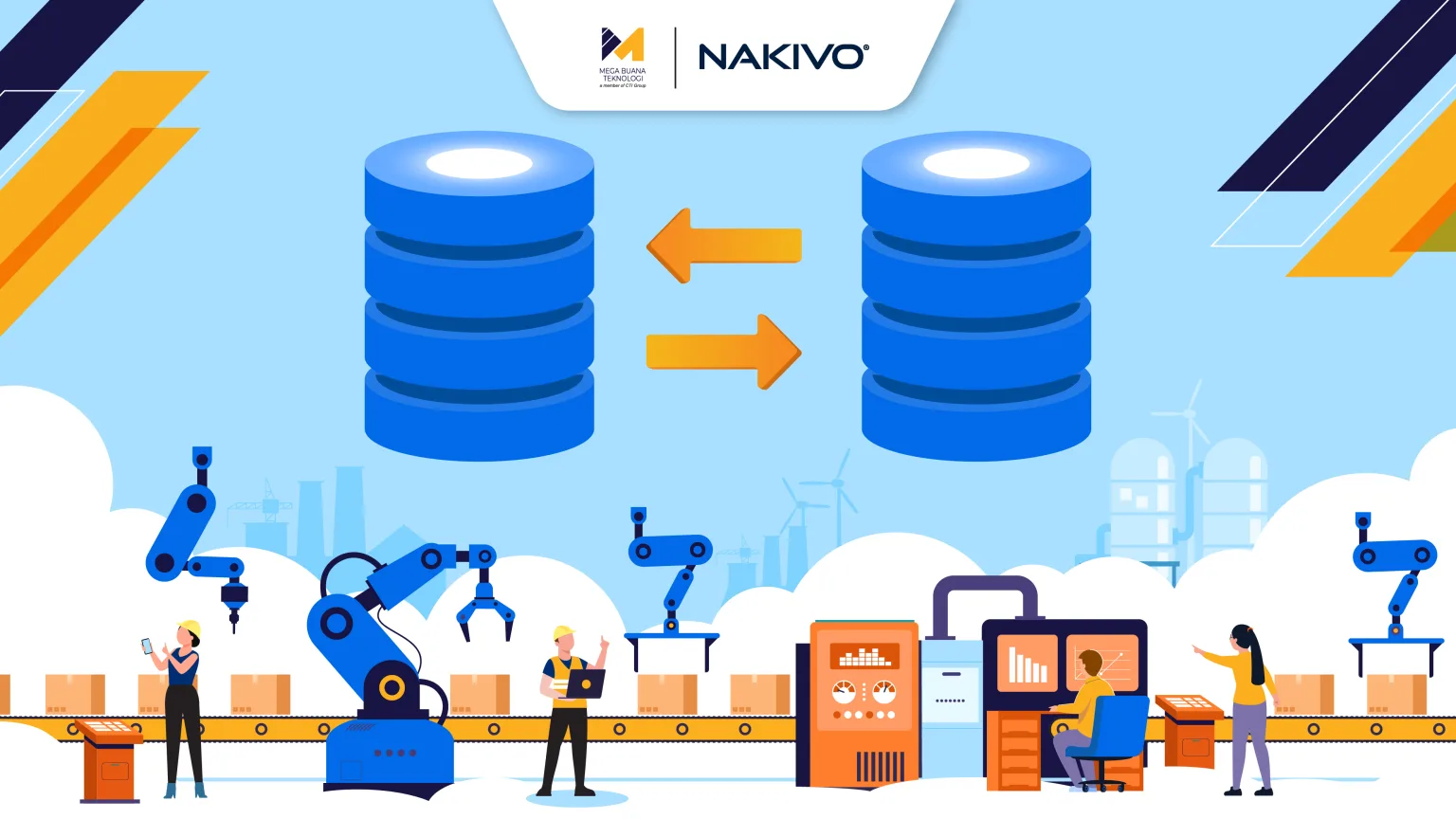
In technical terms, data replication is the process of copying data from one location to another, either in real time or on a scheduled basis, to maintain data consistency, system availability, and recovery of readiness during disruptions.
The main goal is to ensure that organizations always have identical copies of critical data stored across multiple locations. Replication can take place through different types of networks, including Local Area Networks (LAN), Storage Area Networks (SAN), Wide Area Networks (WAN), or even cloud environments.
With continuously updated data available in multiple locations, organizations can improve system availability, support load balancing, and provide faster data access for users across different operational regions.
Why Data Replication Matters in a Disaster Recovery Strategy
In a disaster recovery (DR) strategy, data replication plays a critical role in keeping services running when primary systems experience disruptions.
The reality is that no IT system is completely immune to failure. Hardware issues, cyberattacks, power outages, or human error can all bring critical systems to a halt. When this happens, a replicated environment allows backup systems to take over quickly with minimal disruption.
By maintaining synchronized copies of critical data, organizations can respond to incidents faster and keep essential operations running even during unexpected outages. Some of the key benefits of data replication in a disaster recovery strategy include:
Maintaining operational continuity: Customer services can continue running, employees can keep working, and business activities don’t have to stop entirely, even when system disruptions occur.
Reducing financial impact: Downtime is more than just a technical issue. Beyond recovery costs, organizations may face lost revenue, reduced productivity, and declining customer trust.
Strengthening business resilience: With the right replication strategy in place, even major technology incidents can be managed with far less operational disruption.
3 Types of Data Replication and How They Work

To build an effective strategy, organizations need to understand the most used types of data replication and how each approach works.
Transactional Replication
In transactional replication, the entire database is copied from a primary server (publisher) to a secondary server (subscriber). Every data change is continuously tracked and transmitted in near real time to the destination server.
This approach ensures a high level of data consistency and is commonly used in server-to-server environments where continuous synchronization is required.
Snapshot Replication
Snapshot replication works by capturing a full copy, or snapshot, of a database at a specific point in time and distributing it to other servers.
This method is often used when data changes are relatively infrequent, or as an initial synchronization process between primary and secondary servers.
Merge Replication
With merge replication, two or more databases can make independent data changes before those updates are later merged into a single, consistent dataset.
Because changes can occur on both sides of the system, this method is more complex and is typically used in server-to-client environments that require two-way synchronization.
Read More: Backup vs Replication: Which One Does Your Business Really Need?
Replication for Business Continuity: Why Backup Alone Isn’t Enough
Many organizations still rely on backup as their primary data protection strategy. While backup is essential, it is not always sufficient to guarantee true business continuity.
Backup solutions allow organizations to restore data after an incident occurs. However, the restoration process can take time, especially when large amounts of data need to be recovered from backup storage. In business environments where system availability is critical, even a short delay can have a significant impact.
This challenge is particularly evident in industries such as manufacturing, where IT systems support a wide range of operational processes.
A real-world example can be seen in Weldall Manufacturing, Inc., a manufacturing company based in Wisconsin that manages an IT infrastructure consisting of around 60 virtual machines running ERP systems, Microsoft SQL Server databases, file services, and various operational applications.
Previously, the company relied on a VM backup solution to protect its data. However, the IT team encounteredseveral operational challenges, including:
- Slow backup processes
- Backup job failures during infrastructure upgrades
- Long file recovery times, sometimes taking up to an hour to restore a single file
In an operational environment that runs daily production activities, delays like these can significantly affect team productivity.
This is why organizations like Weldall need more than just backups. VM replication allows systems to fail over to another site when disruptions occur, enabling operations to continue without waiting for lengthy data restoration processes.
The case highlights an important lesson for modern enterprise environments: backup and replication must work together to ensure system availability and support true business continuity.
Managing Backup and Replication Strategies with NAKIVO
To implement an effective backup and replication strategy, organizations need a platform that can manage data protection in an integrated and reliable way.
NAKIVO Backup & Replication is designed to help organizations protect critical data while ensuring system availability across multiple IT environments, including virtual, physical, cloud, and hybrid infrastructures.
Through its advanced technology, NAKIVO offers several strategic capabilities that help strengthen business operations:
Real-Time Replication
Enables near-instant data synchronization, allowing organizations to reduce their Recovery Point Objective (RPO) to near zero.
Automated Site Recovery & Failover
Disaster recovery scenarios can be automated, enabling systems to switch to backup locations faster during unexpected disruptions.
Network Acceleration for Cross-Site Replication
Compression and network optimization technologies help speed up replication over WAN connections without placing excessive strain on bandwidth.
Simple Management Dashboard
All backup and replication activities can be monitored from a centralized interface, making it easier for IT teams to manage and oversee data protection processes.
With this approach, organizations gain more than just data backups; they gain the ability to restore services quickly and maintain operational continuity even when system disruptions occur.
Ensure Business Continuity with NAKIVO and Mega Buana Teknologi
Implementing an effective data replication strategy requires careful architectural planning to ensure that data protection aligns with operational business needs.
Mega Buana Teknologi (MBT), part of the CTI Group, helps organizations design and implement solutions based on NAKIVO Backup & Replication tailored to their IT infrastructure.
Supported by an experienced team of professionals, MBT ensures that every implementation strengthens system resilience, accelerates recovery processes, and supports uninterrupted business operations.
Consult with MBT’s experts today to explore the most effective data replication and disaster recovery strategy for your organization’s IT infrastructure.
Author: Wilsa Azmalia Putri
Content Writer CTI Group