
When a business’s IT system experiences an outage, the threat of data loss and downtime will inevitably have a direct impact on transactions, customer service, and daily operations. For companies with mission-critical workloads, routine backups alone are not enough to guarantee that strict recovery targets will be met. A disaster recovery strategy is needed to keep data replication up to date and accelerate recovery when the primary infrastructure fails.
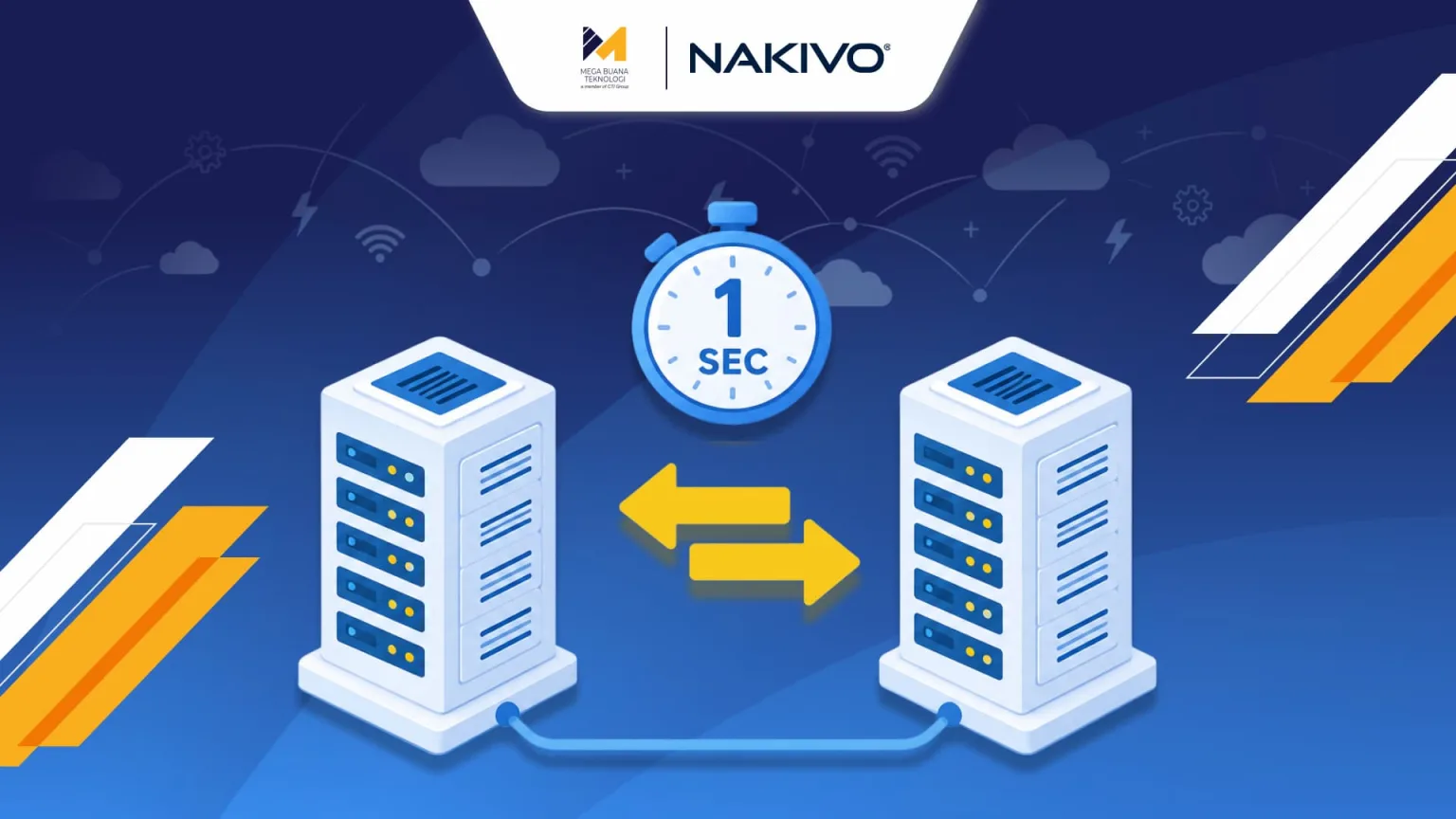
To that end, real-time replication is essential as a technology that enables data synchronization with latency measurable in sub-seconds, seconds, or minutes as data is generated. Real-time replication allows companies to design more responsive data recovery strategies, reduce the potential for data loss, and ensure business continuity.
Why Traditional Backup Falls Short for Mission-Critical Workloads?
Traditional backups typically rely on scheduled daily or hourly copies of data. This means changes made after the latest backup may be lost if a system failure occurs.
Real-time replication takes a different approach by continuously transferring data changes to a target system. This difference is critical for banking, logistics, and production databases that require high data availability. When transactions stop, the impact goes beyond data loss and may include financial losses, service disruptions, and reduced customer confidence.
How Real-Time Replication Works with I/O Filter Technology?
NAKIVO uses I/O Filter technology to support incremental replication in VMware environments. This technology captures I/O changes at the hypervisor level, allowing only modified data blocks to be transferred to the replica site.
This approach helps accelerate replication while reducing storage requirements.
Key capabilities include:
- Proprietary I/O Filter: Optimizes replication processes in VMware environments.
- Continuous Incremental Replication: Synchronizes data changes at intervals measured in seconds rather than minutes.
- Unused Block Skipping: Excludes unused blocks and blocks occupied by deleted files to optimize data transfer and storage consumption.
Achieving a One-Second RPO and Five-Minute RTO for Enterprise Disaster Recovery
Recovery Point Objective (RPO) and Recovery Time Objective (RTO) define how much data an organization can afford to lose and how quickly systems must be restored. With Site Recovery Orchestration, NAKIVO helps automate recovery procedures through disaster recovery playbooks. Organizations can also perform non-disruptive failover testing to validate recovery readiness without disrupting primary operations.
- RPO ≥ 1 Second: Provides granular recovery points based on captured data changes.
- RTO ≤ 5 Minutes: Supports recovery through instant and automated failover to replica VMs.
Improving Cost Efficiency and Centralized Management with NAKIVO
An effective disaster recovery strategy should also consider total cost of ownership (TCO), data transfer security, and management efficiency. With centralized management, IT teams can simplify administration and monitor replica readiness across multiple locations.
NAKIVO offers several advantages:
- 49% Lower TCO: Potential total cost of ownership savings compared with other vendors, based on NAKIVO’s comparative claims.
- 2X Faster: Optimized replication performance through I/O Filter technology. The specific performance advantage depends on the tested configuration.
- AES-256 Encryption: Helps protect data during transfer across networks, subject to the applicable encryption configuration.
- Centralized Management: Monitors replication jobs and VM health through a unified management dashboard.
Also Read: Immutable Backup, The Ransomware Defense Strategy Chosen by 81% of IT Professionals
Supporting Regulatory Compliance and Enterprise Data Resilience
In Indonesia, OJK Regulation PADK No. 1 of 2026 governs IT operations for commercial banks, covering IT architecture, risk management, information security, and data management. Meanwhile, Law No. 27 of 2022 on Personal Data Protection establishes obligations for protecting personal data throughout its processing.
Real-time replication can serve as part of an organization’s Disaster Recovery Plan (DRP) to support data availability and recovery. However, replication does not replace other security and compliance controls. Organizations should integrate it with backup strategies, recovery testing, access protection, and data protection policies.
Modernize Your Disaster Recovery Strategy with NAKIVO and MBT
Don’t wait for an incident to discover whether your disaster recovery strategy is ready. Mega Buana Teknologi as an authorized NAKIVO distributor in Indonesia, helps organizations develop data protection and disaster recovery strategies aligned with their infrastructure requirements.
Mega Buana Teknologi, as part of CTI Group, supported by technical expertise in virtualization and backup, MBT can assist organizations through virtualization and backup through readiness assessment, DR architecture planning, PoC, and implementation support. Schedule a consultation with the MBT team and test real-time replication capabilities in your VMware environment.
Author: Ervina Anggraini – CTI Group Content Writer