
As your business grows, your data grows with it, often faster than expected. And when data expansion starts eating up storage space, managing it becomes a real operational challenge.
This is where cloud tiering comes in.
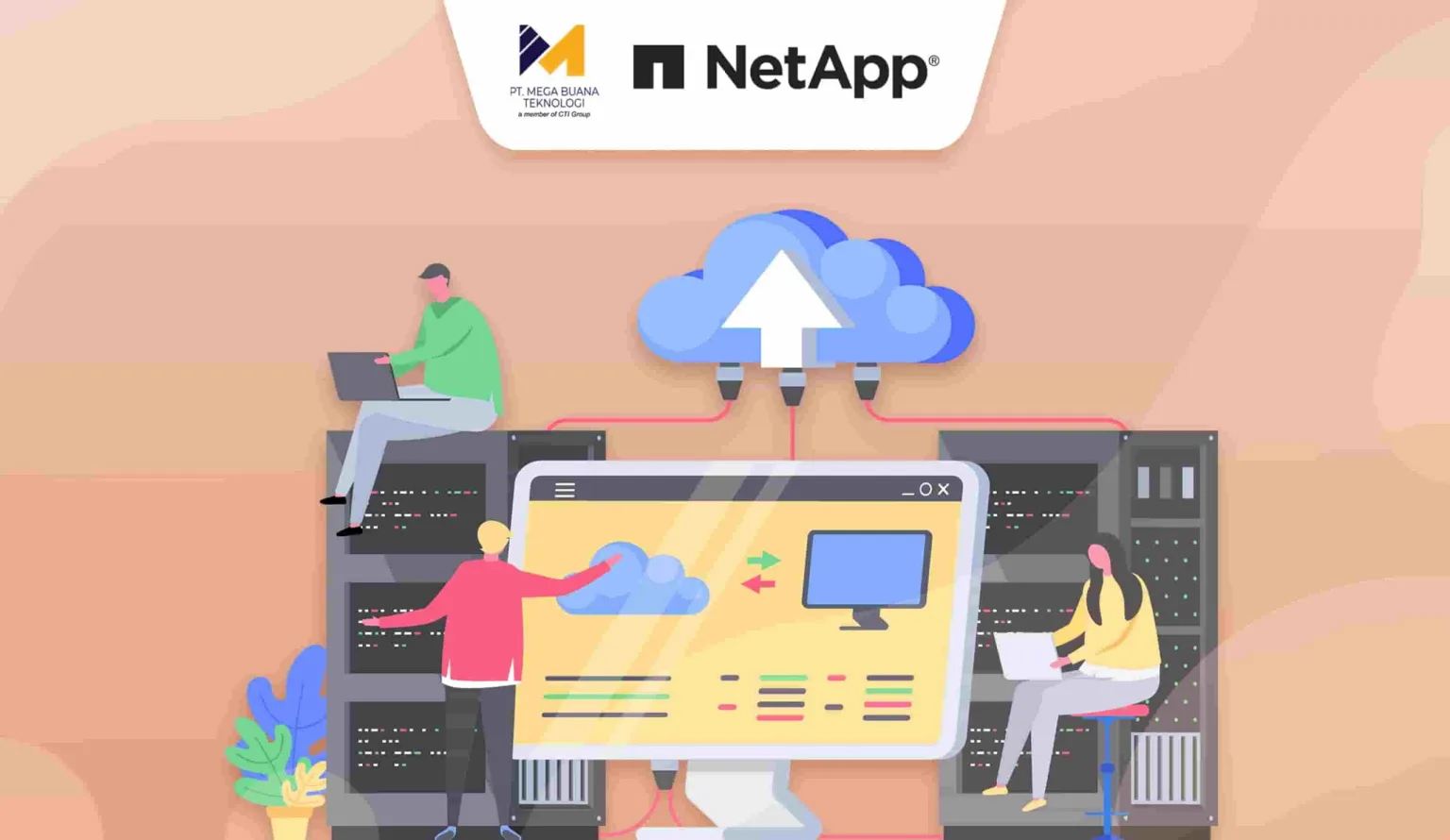
Cloud tiering helps businesses handle data growth by expanding storage capacity while keeping costs under control. More than just “extra storage,” cloud tiering also supports smarter data management and helps optimize primary storage, so your most critical workloads stay fast and efficient.
So, what are the biggest challenges businesses face in data management today, and how can cloud tiering help? Let’s break it down.
5 Common Challenges in Data Management
As businesses scale, the volume, variety, and speed of data also increase. Eventually, organizations need more effective tools to manage their data, tools that can keep up with modern workloads, and operational demands.
According to HashMicro, here are five major challenges businesses often face in data management.
Not Knowing What Data You Actually Have
When data comes in many formats, companies often store it across multiple sources and platforms. The result? Data becomes scattered, harder to track, and difficult to access when needed. Without realizing it, this lack of visibility can slow down operations and decision-making.
Maintaining Data Performance
Daily, businesses collect, store, and use large amounts of data to support operations. This means organizations must be able to monitor databases, adjust indexes as queries change, and maintain performance without disrupting workloads, especially during peak hours.
Constantly Changing Requirements
Business requirements don’t stay the same forever. Policies, internal rules, and compliance standards can shift over time.
That’s why companies need to review data regularly to identify updated requirements, especially when dealing with personally identifiable information (PII) that must be tracked and monitored to align with global regulations.
Not Knowing the Purpose of the Data
A company needs to understand why it collects and stores certain data in the first place, so the data can be processed and turned into meaningful business analysis. Otherwise, collecting data without using it simply becomes a waste of effort and unnecessary storage cost.
Adapting to Different Data Storage Environments
Companies today often store data across multiple systems such as data warehouses, data lakes, and data marts. These storage options allow businesses to transform data between formats for different analytical needs, but they also add complexity, especially as the storage environment grows.
Getting to Know NetApp Cloud Tiering
To help businesses overcome today’s data management challenges, NetApp provides a cloud tiering solution designed to extend ONTAP-based clusters using lower-cost storage. This approach helps organizations manage growing data volumes while keeping performance stable and predictable.
At its core, cloud tiering helps businesses manage storage pools more efficiently by placing data in the right tier at the right time. The solution is also integrated with NetApp Cloud Manager, giving you full visibility and control across hybrid cloud storage clusters from a single endpoint.
NetApp cloud tiering is built to optimize storage costs, simplify IT operations, and streamline hybrid multi-cloud environments. Powered by FabricPool technology, it provides intuitive management of unstructured data, automatically placing it into the most appropriate tier based on predefined policies.
In practice, this means one of the most difficult parts of data management, identifying and moving cold data, can happen automatically and seamlessly, without requiring changes at the application layer.
NetApp cloud tiering also enables businesses to scale storage at a much lower cost. With Recapture, organizations can reclaim an average of 80% of high-performance storage, reducing costs by more than 40%, saving both time and budget.
Also Read: Mengenal Solusi Cloud Storage: Tantangan Hingga Keuntungan untuk Bisnis
How Cloud Tiering Works
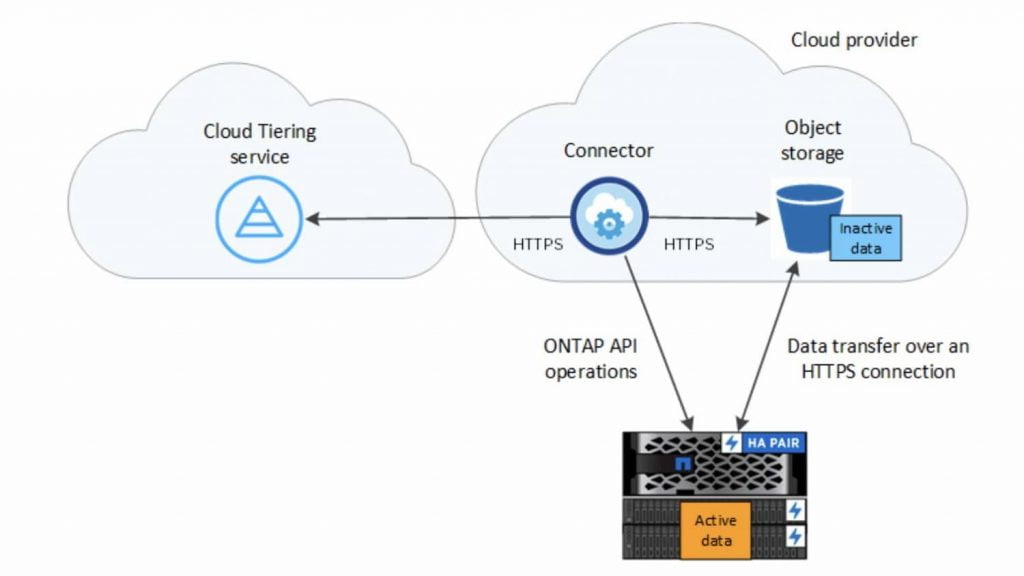 source: NetApp
On its official website, NetApp explains cloud tiering through four main stages, from discovering and moving data into lower-cost object storage, to delivering real-time insights that help you manage storage more efficiently.
Here’s how it works:
Step 1: Discover
Automatically discover and identify your NetApp ONTAP clusters and volumes (including Cloud Volumes ONTAP), then connect them to your preferred storage service.
Step 2: Tier
Set your targets and define tiering policies for each data tier. Your volumes and data will be placed in the right tier at the right time based on usage patterns.
Step 3: Manage
Monitor, manage, and adjust your policies as needed to unlock more storage capacity at lower cost, so you can continuously improve savings over time.
Step 4: Save
An integrated dashboard provides real-time data visibility, so you don’t have to worry about manual migration or moving data into other storage environments.
Key Features of NetApp Cloud Tiering
NetApp cloud tiering delivers automation, monitoring, reporting, and a more user-friendly data management interface. You can tier inactive data from on-premises ONTAP systems to storage providers such as Amazon S3, Microsoft Azure Blob, Google Cloud, S3-compatible object storage, and NetApp StorageGRID.
Here are some of the standout features of NetApp cloud tiering:
- Automated setup and management, making it easier to configure and run data tiering from on-premises ONTAP clusters to the cloud
- The ability to choose a default cloud provider storage tier or access tier, or use lifecycle management to move data from older tiering solutions to more cost-efficient tiers
- A single-pane view eliminates the need to manage FabricPool across multiple clusters separately
- Detailed reports showing active vs inactive data across each cluster
- Tiered health status monitoring, helping you quickly identify and fix issues when they occur
- If you use Cloud Volumes ONTAP, it will also appear in the cluster dashboard, giving you a complete view of data tiering across your hybrid cloud infrastructure
Benefits of Using NetApp Cloud Tiering
NetApp cloud tiering enables smarter, more efficient data management. Beyond that, here are the key advantages for your business.
Integrated Data Analytics
Analyze your data quickly and seamlessly to identify how much of it is cold or rarely accessed and generate reports on the capacity that can be reclaimed and reused.
Tiering That Fits Your Needs
Define or adjust policies based on your business requirements. Set destination volumes, optimize data movement efficiency, and schedule automation; all easily managed in just a few clicks.
Cost Savings
Increase your savings with real-time and historical tiering dashboards that show optimization trends, actual savings, and actionable recommendations to help you reduce costs further.
Unified Tiering Management
Access everything from a powerful web-based GUI that provides a comprehensive view of all tiered environments and instances without needing additional software or hardware that requires constant maintenance.
Also Read: Data Masalah Kehilangan dan Kerusakan Data dengan Solusi SnapMirror ONTAP
Get NetApp Cloud Tiering Solutions with MBT
Now is the time to manage your growing business data and primary storage more cost-effectively with NetApp cloud tiering solutions from Mega Buana Teknologi (MBT). As an authorized advanced partner of NetApp in Indonesia, MBT helps businesses across industries gain more storage capacity while keeping costs under control.
Supported by an experienced and certified IT team, MBT will guide you through every stage, ensuring a smooth implementation without unnecessary trial and error. For more information about NetApp solutions, contact the MBT team at marketing@megabuana.id
Author: Ervina Anggraini – Content Writer CTI Group