
Imagine a manufacturing plant filled with sensors and production data flowing uncontrollably, resulting in corrupted files, system downtime, or missed alerts. Or consider the mining sector, where exploration, geological, and production data are scattered across systems, creating fragmented insights that lead to poor decisions and skyrocketing costs.
In today’s digital world, data is no longer just an asset but it’s both valuable “fuel” and a ticking time bomb that must be managed with precision. Data governance now serves as the last line of defense against business losses, ensuring integrity, security, and compliance through well-defined policies and procedures governing how data is collected, stored, processed, and used responsibly.
According to the Precisely 2025 Planning Insights report, 54 percent of organizations view data governance as their top challenge in maintaining data integrity, closely followed by 56 percent citing data quality as a key concern. These findings highlight the critical need for robust data governance frameworks amid the growing complexity of digital environments spanning edge, cloud, and IoT ecosystems.
What is Data Governance?
Data governance is a framework that defines the policies, processes, standards, and responsibilities that ensure data within an organization is manages as a trusted asset. This framework consist of collection and storage to its processing and utilization, involves determining who owns the data (data ownership), how the data is stored and used, and how it is maintained to remain accurate, secure, and comply with regulations.
In other words, data governance is not only about technology, it’s also about people, processes, and rules that unify the entire data ecosystem within an organization. Data governance helps organization ensure that the data used is reliable (accurate, complete), data is accessible to the right people at the right time, and it’s utilized according to business goals and in comply with regulations.
This framework is especially crucial in the era of digital transformation, big data, and AI. It is because organizations face serious risks such as data breaches, poor data quality, duplication, and flawed decision making without strong data governance.
The Purpose and Benefits of Data Governance
The core goal of data governance is to ensure data integrity, security, and availability, while enabling organizations to maximize data’s potential for smarter, faster business decisions. It’s not just about control or compliance; data governance serves as a strategic foundation that transforms data into an asset while minimizing the risks of poor data management.
An effective data governance strategy offers four key benefits:
- Establishes a single source of truth across the organization for trusted decision-making.
- Improves operational efficiency by reducing data duplication, eliminating silos, and optimizing data assets.
- Strengthens data security and ensures compliance with industry regulations and standards.
- Supports analytics, AI, and data-driven initiatives by providing accurate, accessible, and well-managed data.
Challenges in Implementing Data Governance
Building an effective data governance framework requires the right strategy, roles, and technology to overcome multiple challenges, from human error and organizational culture to architecture and data management issues. The most common challenges include:
- Lack of leadership commitment, limited resources, and unclear strategic direction.
- Data silos and system fragmentation across departments and environments (on-premises, cloud, hybrid), making visibility and integration difficult.
- Poor data quality in terms of accuracy, completeness, and consistency, eroding trust in analytics outcomes.
- Low data literacy and weak data culture, where governance policies are misunderstood or ignored.
- Insufficient technology, skilled talent, or funding to implement sustainable data governance initiatives.
- Complex data architectures and multi-cloud environments that make enforcing control and visibility more challenging.
The 5 Pillars of Data Governance
Data governance implementation relies on five fundamental pillars: Data Quality, Data Ownership & Stewardship, Data Security & Privacy, Data Compliance & Regulations, and Data Lifecycle Management.
Data Quality
Data quality includes accuracy, completeness, consistency, and timeliness. Poor-quality data leads to flawed decisions, unreliable analytics, and higher operational risk. Organizations should implement quality standards, validation, and cleansing routines while tracking key data quality metrics to maintain reliability.
Data Ownership & Stewardship
Data ownership defines who is responsible for specific data assets, while stewardship ensures proper management in line with governance policies. Clear ownership and stewardship foster accountability and maintain control over how data is used, ensuring decision-makers have confidence in data integrity.
Data Security & Privacy
Security and privacy protect data from unauthorized access, leaks, and misuse. This pillar enforces compliance with privacy laws and includes practices like access control, encryption, data classification, auditing, and policy enforcement to protect sensitive information throughout its lifecycle.
Data Compliance & Regulations
This pillar ensures organizational adherence to relevant regulations and industry standards. Without compliance, businesses risk legal sanctions and reputational harm. Governance frameworks must embed compliance processes to ensure audit readiness and policy alignment.
Data Lifecycle Management
Lifecycle management governs data from creation and storage to usage, maintenance, archiving, and deletion. A robust lifecycle strategy keeps data relevant, secure, and compliant—reducing storage costs and minimizing long-term risks.
The Process of Implementing Data Governance
Here are six main steps in implementing data governance in your organizations.
Define Objectives and Policies of Data Governance
Start by aligning data governance goals with business strategy—why it’s needed, what outcomes are expected, and how data supports the company’s mission. Then, establish clear policies, definitions, standards, and accountability metrics.
Form a Data Governance Team
Build a cross-functional team that includes data owners, stewards, IT, and compliance experts. Define roles and responsibilities to ensure consistent policy enforcement and collaboration.
Classify and Manage Data Effectively
Identify and categorize data (e.g., sensitive, critical, regulatory), map data flows, remove duplicates, and assign appropriate access controls and storage based on classification for each data.
Leverage Technology for Data Governance
Adopt data catalogs, quality profiling tools, metadata and lineage systems, and security platforms to automate and integrate governance processes for scalability and consistency.
Train and Raise Awareness
Beyond tools and policies, governance success depends on people. Conduct regular training to improve data literacy, reinforce accountability, and build a culture that values data integrity.
Monitor and Evaluate Continuously
Regularly track metrics, conduct audits, and update governance policies to stay aligned with changing business goals, regulations, and technologies.
Read More: What’s The Different Between Data Privacy & Data Security?
The Future of Data Governance with MBT
Data has become the most asset for modern enterprises and effective data governance is the foundation for reliability, efficiency, and resilience across all business operations.
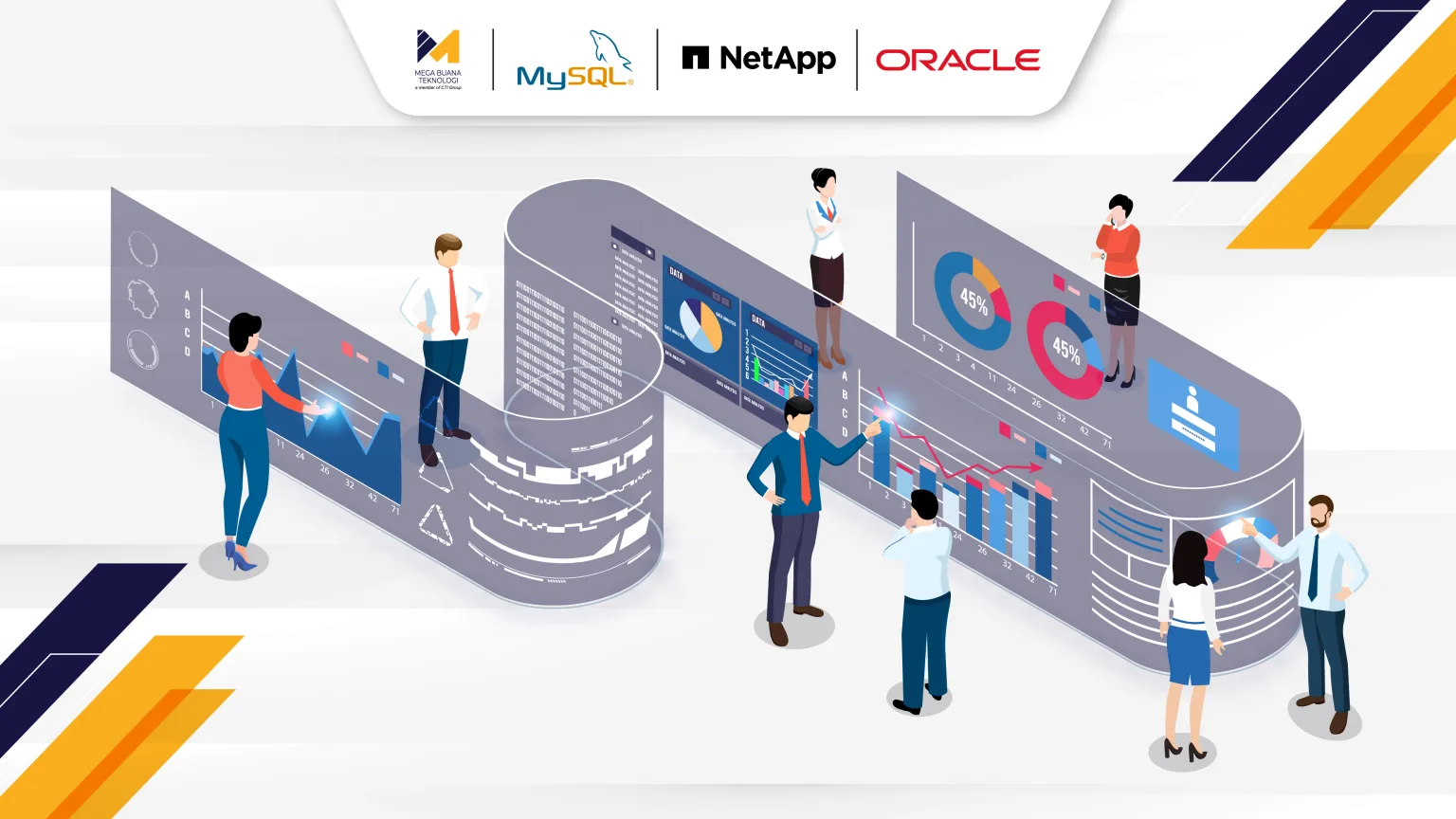
Mega Buana Teknologi (MBT) takes a holistic approach to data governance through integrated solutions from MySQL HeatWave, NetApp BlueXP, and Oracle Enterprise Metadata Manager (OEMM) that empowering organizations across industries to ensure data security, compliance, and strategic value. With MBT, your enterprise data is always ready to drive smarter decisions and accelerate innovation.
MySQL HeatWave
Powered by advanced architecture, MySQL HeatWave delivers faster performance than standard MySQL, integrating OLTP, OLAP, and Machine Learning in a single database engine that eliminating the need for separate ETL processes. Beyond speed, it acts as a proactive and reactive security layer that detects anomalies with machine learning and traces root causes, actors, and impacts of potential breaches.
With real-time monitoring and detailed auditing, HeatWave enhances transparency and accountability across all user activities especially for privileged accounts without system overhead. Features like customizable auditing, real-time monitoring, multi-instance support, and SQL-based access ensure flexibility and scalability for any enterprise environment.
NetApp BlueXP
While HeatWave ensures database integrity, NetApp BlueXP manages, secures, and optimizes data across the edge, on-premises, and cloud environments. Its AI-powered discovery and classification engine provides complete visibility into data structure, location, and status.
BlueXP safeguards data with AI-driven ransomware detection offering up to 99 percent accuracy, identifying and isolating threats before they affect production systems. With built-in data mapping, compliance automation, and migration acceleration, BlueXP creates a strong foundation for efficient, compliant, and intelligent data governance.
The result is higher data quality for better business decisions, improved operational efficiency through reduced duplication, and greater agility for seamless data mobility across environments.
Oracle Enterprise Metadata Manager
As HeatWave protects data integrity and BlueXP ensures security, Oracle Enterprise Metadata Manager (OEMM) serves as the intelligence center of your governance ecosystem that standardizing and harmonizing metadata across systems.
OEMM identifies and maps the top 5–10 percent of business-critical data, focusing resources on what matters most. It extracts metadata from 70+ Oracle and non-Oracle systems (including IBM, SAP, Microsoft, Tableau, and PostgreSQL), consolidating them into a unified metadata repository for cross-team collaboration.
With Critical Data Elements (CDE) identification, data lineage, and workflow automation, OEMM enables full traceability, impact analysis, and quality assurance. Integrated with Oracle Enterprise Data Quality (EDQ), it ensures all data remains clean, validated, and business ready.
Through the synergy of MySQL HeatWave, NetApp BlueXP, and Oracle Enterprise Metadata Manager, MBTdelivers an integrated data governance ecosystem—fast, secure, transparent, and compliant with evolving regulatory demands and cybersecurity threats.
As part of CTI Group, MBT is committed to delivering global technology excellence with trusted local expertise. Now is the time to strengthen your organization’s foundation for secure, efficient, and future-ready data governance by consulting with MBT team, your trusted partner in achieving data excellence.
Author: Ervina Anggraini – Content Writer CTI Group