
Imagine your finance team sending quarterly financial reports through a standard email attachment, or your HR department sharing employee records using a cloud storage link that anyone with the URL can access. These practices are still common in many organizations because they’re fast and convenient, but they also create security risks that are often overlooked.
The threat is far from theoretical. According to Verizon’s 2025 Data Breach Investigations Report (DBIR), ransomware was involved in 44% of the data breaches analyzed, marking a significant increase over previous years. The findings reinforce an important reality; todays cyberattack don’t always rely on sophisticated exploits. In many cases, they begin with everyday activities such as sharing files through channels that lack adequate security controls.
As organizations embrace hybrid work, cloud collaboration, and increasingly connected business ecosystems, traditional approaches to file sharing are no longer enough. Businesses need a security model that verifies every access request, limits unnecessary permissions, and protects sensitive information throughout their lifecycle.
This is where Zero Trust File Sharing comes in. Rather than assuming users or devices can be trusted by default, it applies the principles of Zero Trust to everyday file sharing, helping organizations reduce risk while enabling secure collaboration across employees, partners, and external stakeholders.
Why Traditional File Sharing Is Becoming a Growing Security Risk
For many years, organizations relied on a perimeter-based security model, one that assumed users and devices inside the corporate network could generally be trusted. This approach worked well when employees primarily worked from the office, used company-managed devices, and accessed applications hosted within the organization’s own data center.
Today’s workplace looks very different. Employees now collaborate from home, access business applications through the cloud, use personal devices, and work closely with external vendors and business partners. While these changes have improved flexibility and productivity, they have also significantly expanded the organization’s attack surface.
As sensitive information moves across email, cloud storage platforms, collaboration tools, and third-party systems, traditional file-sharing methods introduce risks that many organizations underestimate. Sending unencrypted email attachments, sharing public links without access restrictions, or transferring confidential documents through removable storage devices can all create opportunities for unauthorized access.
The reality is that many data breaches don’t begin with highly sophisticated attacks. Instead, they often start with everyday mistakes, a compromised user account, a file shared with the wrong recipient, or an access permission that was never revoked. In today’s interconnected business environment, even a single oversight can expose sensitive information and create far-reaching operational and reputational consequences.
Understanding Zero Trust File Sharing
Traditional security models are built on the assumption that users and devices inside the corporate network can generally be trusted. While this approach worked in the past, it has become increasingly ineffective in today’s cloud-first, hybrid work environment where data is constantly moving across users, devices, and external platforms.
This shift has given rise to Zero Trust, a security strategy based on one fundamental principle: Never Trust, Always Verify.
Rather than granting access based on network location alone, Zero Trust requires every user, device, and application to be continuously verified before access to sensitive resources is allowed. Identity, device posture, context, and risk are all considered before trust is established.
When applied specifically to file sharing, this approach becomes Zero Trust File Sharing. Instead of assuming that anyone with a link or network access should be able to open, download, or distribute sensitive documents, Zero Trust File Sharing ensures that every access request is authenticated, authorized, and monitored. Whether the file contains financial records, customer information, intellectual property, or confidential business documents, access is granted only to the right users, at the right time, and with the appropriate level of permission.
Zero Trust File Sharing is about much more than adding passwords to files. It establishes a security framework where every file-sharing activity is treated as a potentially sensitive transaction, one that requires continuous verification, visibility, and control.
Zero Trust Doesn’t Mean Distrusting Employees
One of the most common misconceptions about Zero Trust is that it reflects a lack of trust in employees. Thestrategy is designed to address the evolving nature of cyber threats, not the people using technology.
Today’s security incidents are often caused by compromised credentials, malware-infected devices, phishing attacks, or simple human error. Even legitimate users can unknowingly become entry points for cybercriminals if their accounts or devices are compromised.
For this reason, Zero Trust focuses on verifying every access request rather than judging the trustworthiness of individuals. Security decisions are based on identity, context, and risk instead of assumptions or previousaccess history.
This approach allows organizations to strengthen security without sacrificing productivity. Employees, business partners, and external collaborators can continue working efficiently while organizations maintain tighter control over who can access sensitive information and under what conditions.
Key Principles of Zero Trust File Sharing
Implementing a Zero Trust approach to file sharing requires more than a single security feature. It involves combining multiple layers of protection that work together to verify identities, control access, and maintainvisibility over sensitive information throughout its lifecycle.
Several key principles form the foundation of an effective Zero Trust File Sharing strategy.
Strong Identity Verification
Every access request should begin with identity verification. Technologies such as Multi-Factor Authentication (MFA) and Single Sign-On (SSO) help ensure that users are who they claim to be before they can access sensitive files, reducing the risk of compromised credentials being used to gain unauthorized access.
Least Privilege Access Control
Not every user requires the same level of access. Following the principle of least privilege, organizations grant only the permissions necessary for an individual to perform their specific responsibilities.
These controls can be applied at multiple levels, from restricting access to specific folders to defining whether users can view, download, edit, share, or delete individual files. By limiting unnecessary permissions, organizations reduce the potential impact of compromised accounts and accidental data exposure.
End-to-End Data Encryption
Sensitive files should remain protected for both whiles being transmitted and stored. Strong encryption ensures that even if data is intercepted during transmission or accessed without authorization, its contents remainunreadable without the appropriate encryption keys.
Continuous Monitoring and Audit Trails
Visibility is a fundamental component of Zero Trust. Organizations need to know who accessed a file, when it was accessed, from which device, and what actions were performed.
Comprehensive audit logs enable security teams to identify unusual behavior, investigate potential incidents more efficiently, and demonstrate compliance with internal governance policies and regulatory requirements.
Assume Breach
One of the defining principles of Zero Trust is to operate under the assumption that security incidents can occur at any time.
Rather than relying solely on preventive measures, organizations also invest in detection, response, and recovery capabilities. This mindset helps minimize the impact of potential breaches and enables faster containment when suspicious activity is detected.
Business Benefits of Zero Trust File Sharing
The value of Zero Trust File Sharing extends well beyond preventing unauthorized access to sensitive documents. It helps organizations strengthen governance, improve operational visibility, and build greater confidence in how information is shared across the business.
From a compliance perspective, Zero Trust File Sharing enables organizations to demonstrate stronger control over who can access sensitive information and how that information is handled throughout its lifecycle. This supports regulatory compliance while simplifying audit preparation through centralized access controls and comprehensive activity records.
The approach also provides greater visibility into how files move across the organization. Rather than relying on assumptions or manually tracing file-sharing activities, IT and security teams gain real-time insights into document access, sharing patterns, and potential security anomalies. This visibility enables faster investigations and more informed incident responses.
Beyond security and compliance, Zero Trust File Sharing helps organizations foster trust among customers, partners, and other stakeholders. Demonstrating that sensitive information is protected through consistent security controls reinforces confidence in the organization’s ability to safeguard business-critical data.
Supporting a Zero Trust Strategy with EasiShare
Adopting a Zero Trust strategy doesn’t require organizations to replace their existing IT infrastructure. Instead, it begins with implementing security controls that strengthen how sensitive information is accessed, shared, and governed across the organization.
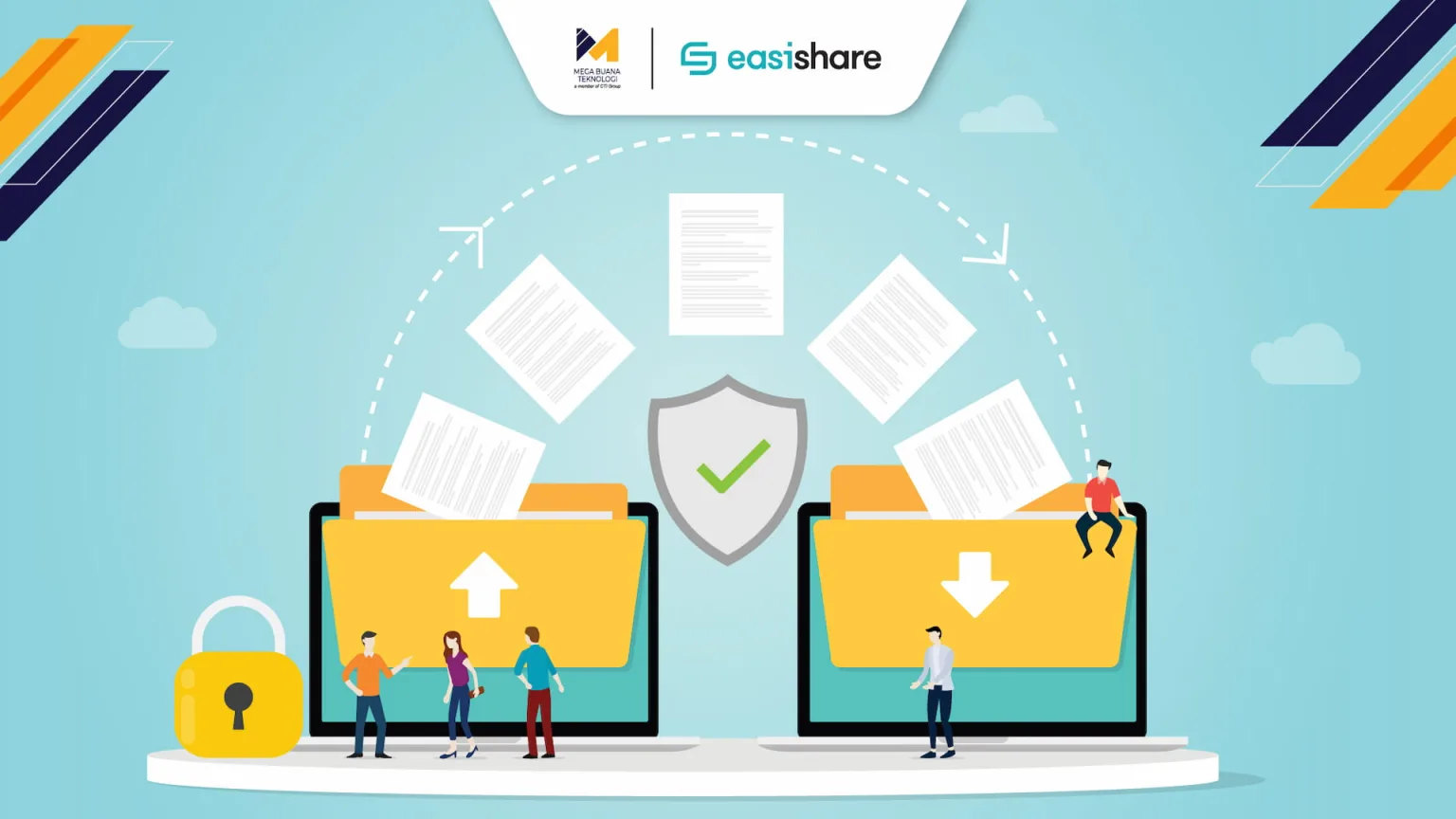
As an enterprise secure file sharing platform, EasiShare provides a range of capabilities that help organizations support the principles of Zero Trust in their day-to-day file sharing activities.
The platform supports MFA, role-based access control (RBAC), and strong encryption for data both in transit and at rest, helping organizations verify user identities, enforce appropriate access permissions, and protect sensitive information throughout the file-sharing process.
EasiShare also delivers comprehensive audit logging, providing IT and security teams with greater visibility into file access and user activity. Organizations can monitor who accessed specific documents, when access occurred, and what actions were performed, making it easier to investigate security incidents and demonstratecompliance with internal policies and regulatory requirements.
Additional capabilities, including dynamic watermarking, expiring sharing links, and remote access revocation, provide organizations with greater control over sensitive documents shared internally and with external partners.
Rather than defining an organization’s Zero Trust strategy, EasiShare helps organizations implement the security controls that support it, enabling secure collaboration without sacrificing productivity or operational efficiency.
Secure Your Enterprise File Sharing with MBT
Zero Trust File Sharing is not about making collaboration more difficult. It’s ensuring that every access request is appropriately verified, every permission is intentional, and every interaction with sensitive data remains visible and accountable.
As cyber threats continue to evolve, and organizations increasingly rely on distributed teams and cloud-based collaboration, secure file sharing has become an essential component of a modern cybersecurity strategy.
As an authorized EasiShare partner in Indonesia, Mega Buana Teknologi (MBT), part of CTI Group, helps organizations assess their file-sharing security requirements, design deployment strategies that align with existing IT environments, and implement solutions that support both business operations and long-term security objectives.
Contact MBT today to learn how EasiShare can help strengthen your organization’s file-sharing security while supporting a broader Zero Trust strategy.
Author: Wilsa Azmalia Putri – Content Writer CTI Group