

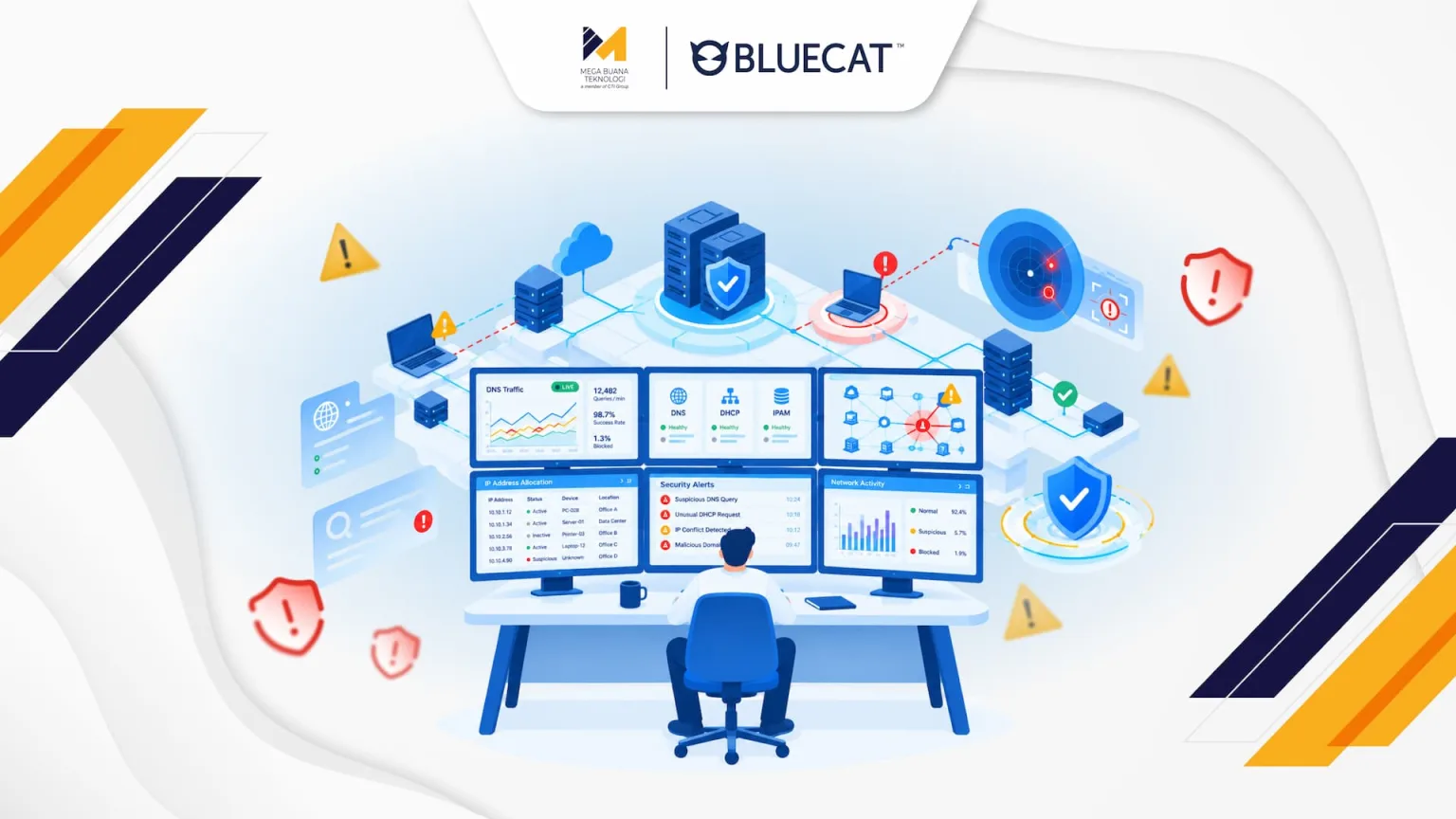
As IT environments become more complex, businesses can no longer rely solely on firewalls and perimeter defenses to protect their networks. Internal traffic, DNS services, IP address management, and connected devices can also expose security gaps that are difficult to detect.
Limited network visibility can leave IT teams unaware of suspicious activities, misconfigurations, or unauthorized devices. This is where network risk assessment becomes essential. By identifying vulnerabilities, evaluating existing security controls, and prioritizing remediation, organizations can address potential risks before they escalate into major security incidents.
Why Is Network Risk Assessment Important for Modern IT Infrastructure?
Network risk assessment is the process of identifying, analyzing, and prioritizing network security risks based on assets, threats, vulnerabilities, and existing security controls. It goes beyond inspecting firewalls and network perimeters to include internal traffic and foundational services such as DNS, DHCP, and IP Address Management (IPAM).
These services play a critical role in connecting devices and managing network communications. Without adequate visibility, suspicious activities and configuration changes can go unnoticed.
Regular network assessments are increasingly important as businesses adopt hybrid cloud environments and connect to more IoT devices. Fragmented visibility makes it harder to identify assets and can increase the risk of lateral movement, where attackers move from one system to another after gaining initial access.
How Can DNS, DHCP, and IPAM Become Network Security Blind Spots?
DNS, DHCP, and IPAM, collectively known as DDI form the foundation of network operations. However, gaps in how these services are managed can create security risks that are difficult to spot.
DNS exploitation
Attackers can use DNS tunneling to transfer data through DNS queries, leverage specific domains to communicate with command-and-control (C2) servers, or flood resolvers with requests to disrupt services. Monitoring DNS query patterns can help IT teams identify unusual activity that may indicate a threat.
Unauthorized devices through DHCP
DHCP automatically assigns IP configuration to devices requesting network access. Without adequate network access controls, unauthorized devices may connect without being properly identified. Device visibility and DHCP activity monitoring help IT teams detect unfamiliar devices and unexpected changes.
Fragmented IPAM management
Managing IP addresses through spreadsheets or disconnected systems can lead to inconsistent records, IP conflicts, and difficulties tracking devices. During a security incident, inaccurate IP records can also slow investigations by making it harder to associate an IP address with the correct asset.
These risks highlight why organizations need comprehensive network visibility rather than relying on security checks at just one layer.
How Can BlueCat DDI Help Reduce Network Blind Spots?
BlueCat offers DDI solutions that help organizations manage DNS, DHCP, and IPAM centrally. One of these solutions is BlueCat Integrity, a platform that integrates DDI management and automation to support enterprise network operations.
Key capabilities include:
Centralized visibility: Consolidates DNS, DHCP, and IP address data to help IT teams monitor and manage infrastructure more consistently, including across hybrid and multicloud environments.
Configuration control and monitoring: Supports configuration management, access controls, and activity logging to assist with audits and investigations. DNS threat detection and blocking depend on the security features or components deployed.
Operational automation: Reduces manual work in IP address provisioning and configuration management, helping minimize human error.
BlueCat also offers Infrastructure Assurance to help identify operational issues, configuration inconsistencies, and potential disruptions within BlueCat Integrity environments. With more consistent data and better visibility, IT teams can identify issues faster and make informed decisions based on more reliable information.
The Business Benefits of Network Risk Assessment
Network risk assessment supports more than cybersecurity. It can also help organizations reduce operational workloads and minimize the risks associated with service disruptions.
A survey of Micetro users published by BlueCat highlights the potential of DDI automation to improve operational efficiency. The findings illustrate how more automated DDI management can help organizations optimize IT time and resources.
The survey reported the following benefits:
- US$123,700 in average annual value, including labor savings and reduced reliance on third-party DDI management vendors.
- 1,040 work hours are saved annually through DDI task automation.
- 65% of respondents realized value in less than two weeks after implementation.
In addition to improving efficiency, preventing network disruptions is particularly important for industries such as financial services, manufacturing, and telecommunications, where service availability is critical. Downtime can interrupt transactions, halt operations, and reduce productivity. Proactive risk mitigation is therefore an important part of maintaining business continuity.
Also Read: MBT Partners with BlueCat Networks to Modernize DDI Network Management
Supporting Security Audits, Investigations, and Compliance
Accurate DNS, DHCP, and IPAM data, combined with relevant logs and activity records, can help auditors and security teams track device activity and investigate incidents.
This documentation can also support assessments against applicable information security requirements, including relevant BSSN regulations and Indonesia’s Law No. 27 of 2022 on Personal Data Protection (UU PDP).
DDI solutions do not guarantee compliance. Organizations still need appropriate security policies, access controls, log retention practices, and incident response procedures to meet their applicable obligations.
Strengthen Network Visibility and Security with MBT
Reducing network blind spots requires comprehensive visibility, consistent asset management, and risk mitigation aligned with business needs.
As an official distributor of enterprise infrastructure solutions in Indonesia, Mega Buana Teknologi (MBT), part of CTI Group, is supported by certified network and security engineers who help businesses assess network risks, design suitable architectures, and implement BlueCat DDI solutions.
Ready to improve network visibility and strengthen your security posture? Schedule a Network Risk & DDI Assessment or discuss a BlueCat Integrity Proof of Concept (PoC) with MBT’s team to evaluate your infrastructure needs and identify the right approach for your business.
Author: Wilsa Azmalia Putri – Content Writer CTI Group