

Healthcare digitalization has become a crucial step in addressing the various challenges faced by hospitals and healthcare institutions in Indonesia. As the volume of patient data continues to grow, the need for digital transformation in healthcare services has become increasingly vital. This transformation enables more integrated, efficient, and secure healthcare delivery—key elements in improving the quality of medical services in today’s digital era.
However, the journey toward digital healthcare is not without challenges, including system integration, data security, and regulatory compliance. Every healthcare institution aiming to transition into digital systems must be able to overcome these challenges to deliver optimal services while adhering to existing standards. Success in adopting digital technologies will be essential to improving operational efficiency and safeguarding patient data.
To understand how healthcare digitalization can be implemented effectively, it is important to explore its key aspects—from the fundamental concepts and definitions to the challenges and practical solutions. Digital healthcare services present immense potential to improve the quality of care in Indonesia. Read this article to learn more.
What Is Healthcare Digitalization?
Healthcare digitalization refers to the transformation of healthcare systems through the integration of digital technologies aimed at improving service quality and operational efficiency. This process includes the digitalization of medical records, patient data management, and the optimization of hospital operations.
Through digital transformation, patients gain easier access to healthcare services such as registration, consultations, and insurance claims. Meanwhile, medical professionals benefit from real-time access to patient medical histories, and hospital management can make more accurate, data-driven decisions.
Challenges of Healthcare Digitalization for Hospitals

In the process of digitalizing healthcare services, hospitals in Indonesia face several major challenges that can affect the success of this transformation. Below are two of the most critical challenges that must be addressed.
IT Governance Challenges in Hospital Information Systems (SIM-RS)

IT governance for SIM-RS (Hospital Management Information Systems) is one of the most complex aspects of healthcare digitalization. These systems must not only integrate various front-end and back-end applications but also ensure that the managed data is secure and compliant with applicable regulations. Key challenges include:
- Ensuring seamless application integration for smooth hospital operations.
- Protecting patient data from cyber threats such as leaks, malware, and exploitation.
- Managing cultural and operational adaptation during digital transformation, which often faces resistance.
Regulatory Framework for SIMRS Implementation in Indonesia
The use of Hospital Information Systems (SIMRS) in Indonesia is governed by several regulations designed to ensure that implementation follows government standards. Key regulations include:
- Ministry of Health Regulation No. 269/Menkes/Per/III/2008, serving as the legal foundation for SIMRS implementation in Indonesia.
- Ministry of Health Regulation No. 72/2016 on Minimum Hospital Service Standards, outlining the required service benchmarks for hospitals.
- Ministry of Health Regulation No. 69/2019 on Health Data Management and Protection, ensuring that healthcare data is properly managed and secured.
- Law No. 36/2009 on Health, regulating various aspects of healthcare services in Indonesia.
- Presidential Regulation No. 82/2018 on the National Health System, providing the national framework for health system implementation, including SIMRS.
The challenges in healthcare digitalization require comprehensive and integrated solutions. To address these needs, Mega Buana Teknologi (MBT) offers purpose-built solutions that support digital transformation in the healthcare sector. With the right approach, hospitals can overcome existing barriers, ensure compliance, and enhance patient care quality.
MBT’s Integrated Solutions for Modern Healthcare

To tackle digitalization challenges and maintain regulatory compliance, MBT provides three core solutions that enable hospitals to transform effectively: NetApp, Huawei Cloud, and Ruijie.
Intelligent Data Protection with NetApp
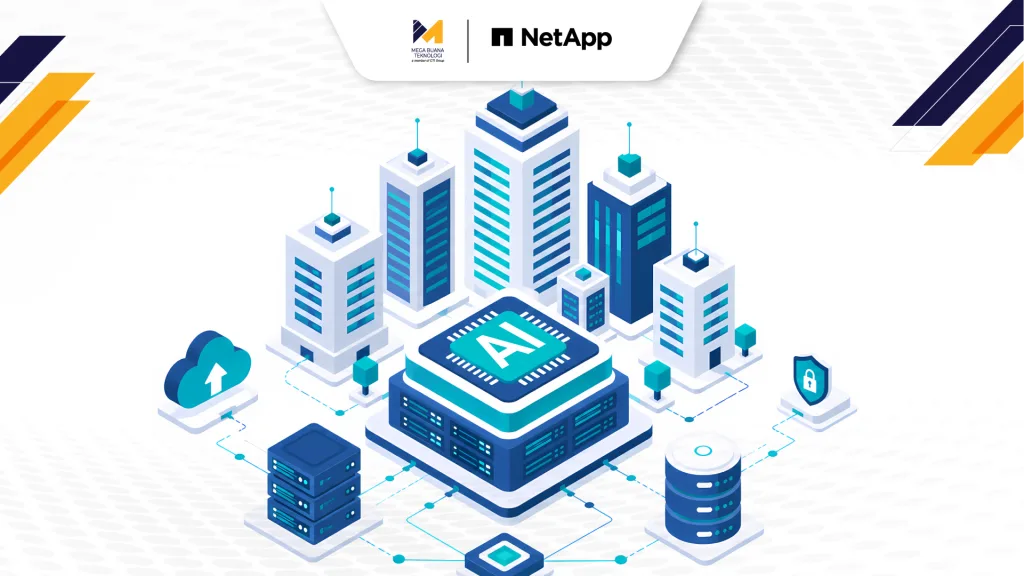
NetApp offers secure and regulation-compliant data protection for electronic medical records, featuring flexible integration with SIM-RS systems—both on-premises and in the cloud.
Reliable Digital Infrastructure with Huawei Cloud
Huawei Cloud provides a scalable, efficient cloud infrastructure that supports hospital operations with high performance and strong data security.
Smart Networking with Ruijie
Ruijie delivers advanced networking solutions that ensure stable connectivity and future-ready hospital infrastructure through technologies such as high-performance WiFi access points and smart ward systems.
Data Synergy and Integration with NetApp

NetApp introduces the SnapLock feature to ensure medical records are securely stored in compliance with regulations. Data is locked in a read-only mode to prevent alterations and is backed up with duplication across multiple sites—safeguarding against data loss and cyberattacks.
As a leader in data storage, NetApp provides flexible and scalable infrastructure that supports multiple data formats, including S3/object storage. Its hybrid cloud capabilities allow hospitals to efficiently manage IT workloads across SIM-RS, DICOM, and PACS systems. This ensures that video files, medical images, and patient records are well integrated within a secure, structured digital environment.
NetApp also supports easy, secure access for hospital staff—both locally and remotely—while maintaining high-speed data processing. The solution integrates seamlessly with existing or new SIM-RS systems and provides comprehensive protection across all data layers. Its broad application support enables hospitals to optimize medical software usage, ensuring smooth and efficient operations.
Intelligent Infrastructure with Huawei Cloud

Huawei Cloud delivers a robust cloud infrastructure tailored to meet the unique needs of Indonesian hospitals. With local service availability ensuring low latency and high performance, Huawei Cloud supports diverse IT architectures—from traditional setups to cloud-native systems.
Transitioning to the cloud with Huawei Cloud offers flexibility and efficiency far beyond traditional IT systems, allowing hospitals to operate more efficiently at lower costs. Conventional IT infrastructure often struggles with scalability and incurs high operational expenses. Huawei Cloud addresses these limitations with scalable, cost-efficient infrastructure that enhances operational performance and provides strong data security—helping hospitals stay future-ready.
Smart Healthcare Networking with Ruijie WiFi Access Points

Ruijie provides advanced networking solutions tailored to modern hospitals, ensuring reliable, high-speed connectivity across all areas. Cutting-edge technologies such as high-performance WiFi access points enable hospital IT systems to operate efficiently in fast-paced medical environments.
With innovations like the All-Optical Ethernet Network and Simplified Optical Ethernet 3.0, Ruijie delivers high flexibility, sufficient bandwidth, and up to 20% CAPEX reduction. AI-driven centralized management enhances network optimization—reducing service complaints by up to 80% and increasing patient satisfaction by up to 60%.
Ruijie also offers Smart Ward solutions to enhance operational efficiency and patient experience through interactive terminals, integrated connectivity, and simplified network management. These innovations ensure hospital networks operate with high stability, supporting seamless and efficient patient care.
Plan Your Hospital’s Digital Transformation with MBT
As a value-added distributor, Mega Buana Teknologi (MBT) provides tailored solutions to support your hospital’s digital transformation journey. Through technologies from NetApp, Huawei Cloud, and Ruijie, MBT empowers hospitals to improve operational efficiency, ensure regulatory compliance, and deliver the best possible patient care.
Partnering with MBT grants access to the latest technologies supported by an experienced team of experts—ensuring for a smooth implementation and reliable operation of your digital healthcare systems. Contact us today through this link for more information about MBT’s healthcare digitalization solutions.
Author: Danurdhara Suluh Prasasta
Content Writer Intern CTI Group