
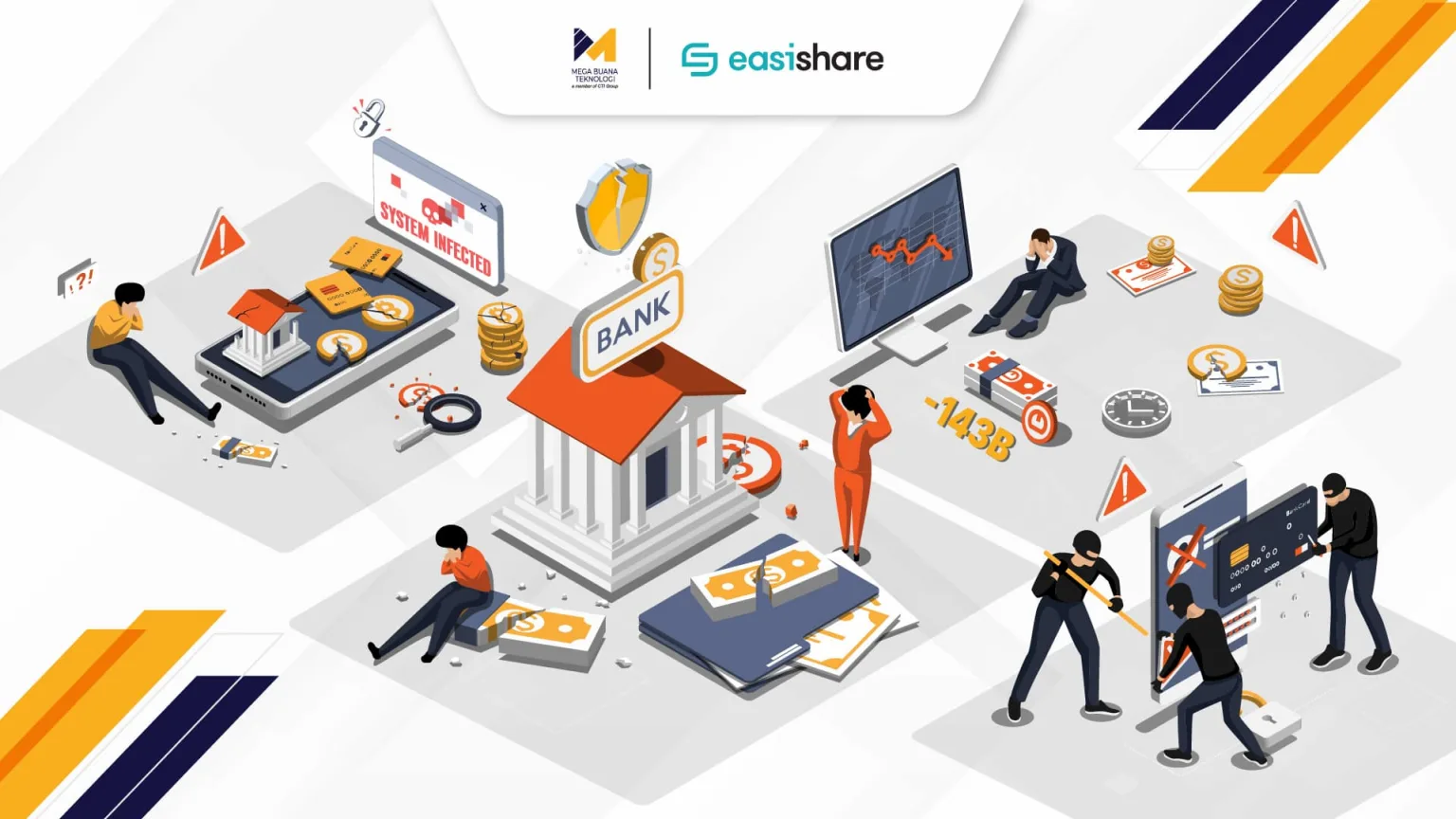
Recent reports about compromised customer accounts have once again drawn attention to cybersecurity risks in Indonesia’s banking sector. This time, the spotlight is on the Bank Jambi incident, which resulted in losses estimated at Rp143 billion and affected more than 6,000 customer accounts.
The incident was reportedly linked to disruptions in the bank’s digital service systems that were later exploited by unauthorized parties to conduct illegal transactions. Within a short period of time, thousands of customers experienced unexpected balance reductions.
In response, the bank took immediate recovery measures, including temporarily suspending certain digital services and conducting forensic audits to identify the root cause of the issue. Local authorities also confirmed that affected customers would be compensated using the bank’s previous year profits to ensure that no customers suffer financial losses.
Beyond the recovery efforts, however, the incident also raises broader questions about the resilience of digital banking systems.
Rather than focusing on a single institution, the case highlights a wider challenge faced by many financial organizations today, how to safeguard sensitive data amid increasingly complex digital infrastructures and evolving internal workflows.
For this reason, understanding the various security risks, whether related to technology, user behavior, or internal data access management, has become an essential step for the banking industry to strengthen its digital defenses in the future.
How Do Hackers Compromise Bank Accounts?
In many financial cybercrime cases, compromised accounts rarely result from a single weakness. Instead, attackers often combine multiple techniques that exploit both technical vulnerabilities and user behavior.
Several attack methods are commonly seen in the financial sector.
Accessibility Service Abuse
Android’s Accessibility Services are designed to assist users with special needs. However, certain malware can abuse this feature to monitor screen activity, capture login credentials, and even take control of mobile banking applications without the user realizing it.
Phishing Attacks
Phishing remains one of the most effective attack techniques. Cybercriminals impersonate legitimate organizations through messages, emails, or fake applications. Once victims enter their login credentials or one-time passwords (OTP), attackers can quickly gain access to their accounts.
Malware-as-a-Service (MaaS)
Cybercrime has become increasingly accessible through MaaS models. In this ecosystem, attackers can rent ready-to-use malware designed specifically to target financial services or mobile banking users. This means sophisticated attacks can be launched even without advanced technical expertise.
These evolving tactics make cyberattacks on financial services more complex than ever. Without layered security strategies, the risk of digital banking breaches continues to grow.
However, external threats are not the only concern. In many organizations, internal access management can also become a critical security challenge if not properly controlled.
Internal Access Risks: An Often-Overlooked Security Gap
When cybersecurity discussions focus on hackers and malware, an important aspect is sometimes overlooked, how sensitive data is accessed and shared internally.
Within a banking environment, multiple teams require access to documents and systems that contain sensitive customer information. These may include operations teams, compliance officers, credit analysts, and other departments.
Without proper governance, internal access can create potential risks such as:
- Unauthorized use of sensitive customer information
- Sharing confidential documents through unsecured communication channels
- Downloading sensitive files without proper monitoring
- Data leaks through file sharing platforms that lack encryption or access control
In many organizations, file sharing still relies on traditional methods such as email attachments or generic file-sharing platforms. While convenient, these tools are not always designed for environments that handle highly sensitive financial data.
This is where secure document management becomes critical. In financial institutions, sensitive information is constantly exchanged between departments, partners, and regulators. Without proper control over how files are shared and accessed, the risk of accidental exposure or unauthorized access can increase significantly.
Secure File Sharing: A Smarter Way to Protect Financial Data
As digital banking adoption continues to grow, financial institutions are no longer managing financial transactions alone. They are also processing and storing vast volumes of sensitive data, making data security one of the most critical aspects of modern banking operations.
For this reason, implementing additional layers of protection, such as secure file sharing, is becoming increasingly important. These solutions provide encrypted environments designed specifically for organizations that handle confidential information, including financial institutions.
Secure file sharing allows organizations to exchange digital documents with stronger security controls, including:
- End-to-end encryption to protect data during transfer
- Role-based access control to ensure only authorized users can access documents
- Detailed audit logs to track file activity and maintain transparency
- Download or distribution restrictions to prevent unauthorized data sharing
With these controls in place, every shared file can be monitored and managed more securely. Only users with the appropriate permissions are able to access or download sensitive documents.
One solution designed to support secure data exchange in highly regulated industries is EasiShare. The platform provides a secure environment for organizations that handle confidential information, including financial institutions.
Through EasiShare, institutions can safely share important documents such as financial reports, customer data, or audit files without exposing them to unnecessary risks. Beyond improving security, secure file sharing solutions also help organizations align with compliance and regulatory requirements common in the financial industry.
Strengthening Banking Data Security with Mega Buana Teknologi
The Bank Jambi incident serves as an important reminder that data security is no longer optional in the digital banking era. As financial services continue to evolve, protecting sensitive information must remain a top priority for every institution.
To support organizations in strengthening their data protection strategies, EasiShareis available through Mega Buana Teknologi (MBT) as a secure file sharing solution designed for enterprise environments and financial institutions.
With encrypted file transfers, strict access controls, and comprehensive monitoring capabilities, organizations can significantly reduce the risk of sensitive data exposure while improving the way critical documents are managed.
Interested in learning how EasiShare can help protect sensitive data in your organization? Contact the Mega Buana Teknologi team to explore how secure file sharing can support your data security strategy.
Author: Wilsa Azmalia Putri
Content Writer CTI Group