

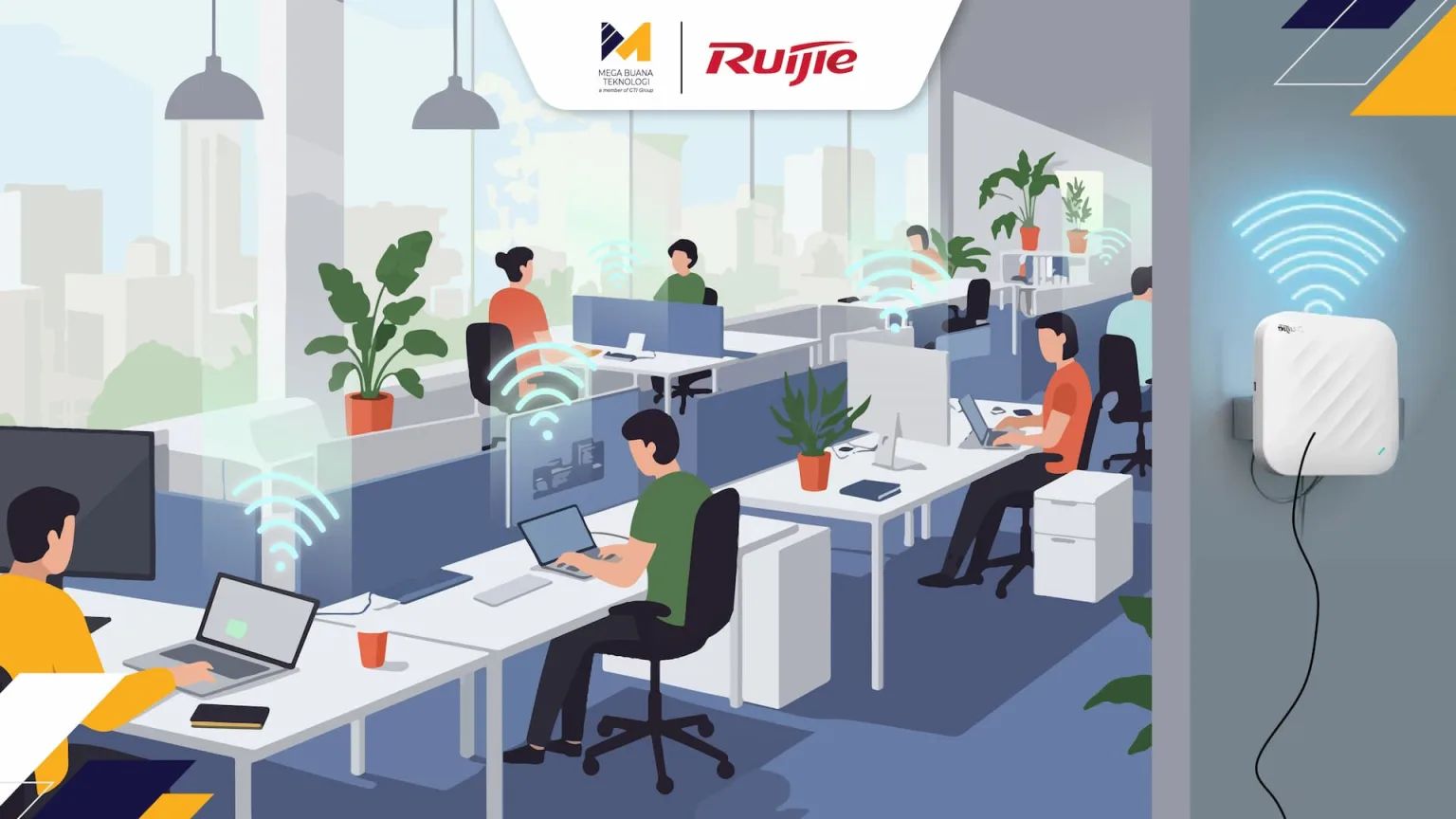
Modern workplaces are putting more pressure on enterprise networks than ever before. At any given moment, hundreds of employees may be joining video meetings, accessing cloud applications, using wireless devices, while IoT sensors and operational systems continuously exchange data in real time.
In environments like these, the challenge is no longer just about internet speed. Businesses now need networks that can remain stable, responsive, and capable of supporting thousands of simultaneous connections without disrupting productivity.
This shift is why many organizations are beginning to evaluate Wi-Fi 7 as the next foundation for enterprise connectivity.
Why Enterprise Network Demands Keep Growing
The way businesses operate today has changed significantly over the last few years. More workflows now rely on cloud platforms, real-time collaboration tools, and wireless connectivity across multiple devices.
A single employee may use a laptop, smartphone, tablet, wireless headset, and other connected devices throughout the day. On top of that, organizations are increasingly dependent on IoT devices, smart security systems, automated building controls, and cloud-based applications running simultaneously across the network.
Wi-Fi 6 has already introduced major improvements to high-density environments. However, the rapid growth of connected devices and bandwidth-heavy applications is pushing many enterprises to look for even greater capacity, efficiency, and network stability, especially in large-scale operations.
As network traffic becomes more crowded, issues such as higher latency, unstable video conferencing, and access point interference become more difficult to avoid. For many organizations, Wi-Fi 7 is no longer viewed as just another technology upgrade, but as part of a long-term infrastructure strategy.
Wi-Fi 7 vs Wi-Fi 6: What Changes for Enterprise Networks?
Wi-Fi 7 (IEEE 802.11be) introduces major advancements in both network capacity and efficiency for enterprise environments. The standard is theoretically capable of delivering throughput speeds of up to 46 Gbps, significantly higher than Wi-Fi 6, which peaks at around 9.6 Gbps.
But the value of Wi-Fi 7 goes beyond speed alone. One of its most important features is Multi-Link Operation (MLO), which allows devices to use multiple frequency bands simultaneously. This helps improve connection stability, reduce latency, and maintain performance even during periods of heavy network congestion.
Wi-Fi 7 also supports channel bandwidths up to 320 MHz within the 6 GHz spectrum, giving enterprises more room to handle large volumes of traffic without quickly running into congestion issues.
For businesses, these improvements translate into faster large-file transfers, smoother real-time collaboration, and more reliable wireless performance in high-density work environments.
How Ruijie Addresses Network Interference Challenges
One of the biggest challenges in modern enterprise environments is signal interference between access points, particularly in multi-floor buildings or workspaces with a high concentration of connected devices.
Ruijie Enterprise leverages the 6 GHz spectrum available in Wi-Fi 7 to provide cleaner and less congested wireless connectivity compared to the already crowded 2.4 GHz and 5 GHz bands. With support for channel widths up to 320 MHz, access points can handle more simultaneous users while maintaining consistent performance.
Ruijie Enterprise also integrates Built-in AI Radio technology to help optimize wireless performance automatically and in real time. The system continuously analyzes traffic conditions and dynamically adjusts channel allocation to reduce interference and maintain connection quality without requiring complex manual tuning from IT teams.
Infrastructure Readiness: What Needs to Be Prepared?
Deploying Wi-Fi 7 successfully requires more than upgrading access points. To fully benefit from higher wireless throughput, the underlying network infrastructure must also be ready to support it.
Many enterprises are now adopting multigigabit switches with 2.5G, 5G, or even 10G ports to prevent bottlenecks on the wired side of the network. Using at least Cat6A cabling is also recommended to ensure stable 10G connectivity across enterprise environments.
Beyond hardware upgrades, network topology planning, access point placement, and backbone distribution all play an important role in ensuring long-term Wi-Fi 7 performance and scalability.
Wi-Fi 7 Implementation Across Different Industries
Wi-Fi 7 is becoming increasingly relevant for industries that depend on stable connectivity in high-traffic environments.
In the creative and media industries, Wi-Fi 7 helps accelerate large file transfers and supports seamless real-time collaboration between teams. In manufacturing and logistics, low-latency connectivity is essential for IoT communication, production sensors, and continuous operational monitoring systems.
Meanwhile, in modern enterprise offices, reliable wireless performance is critical for hybrid meetings, cloud collaboration platforms, and smart building operations that rely on uninterrupted connectivity throughout the day.
Ruijie RG-AP9861-R for High-Density Enterprise Environments
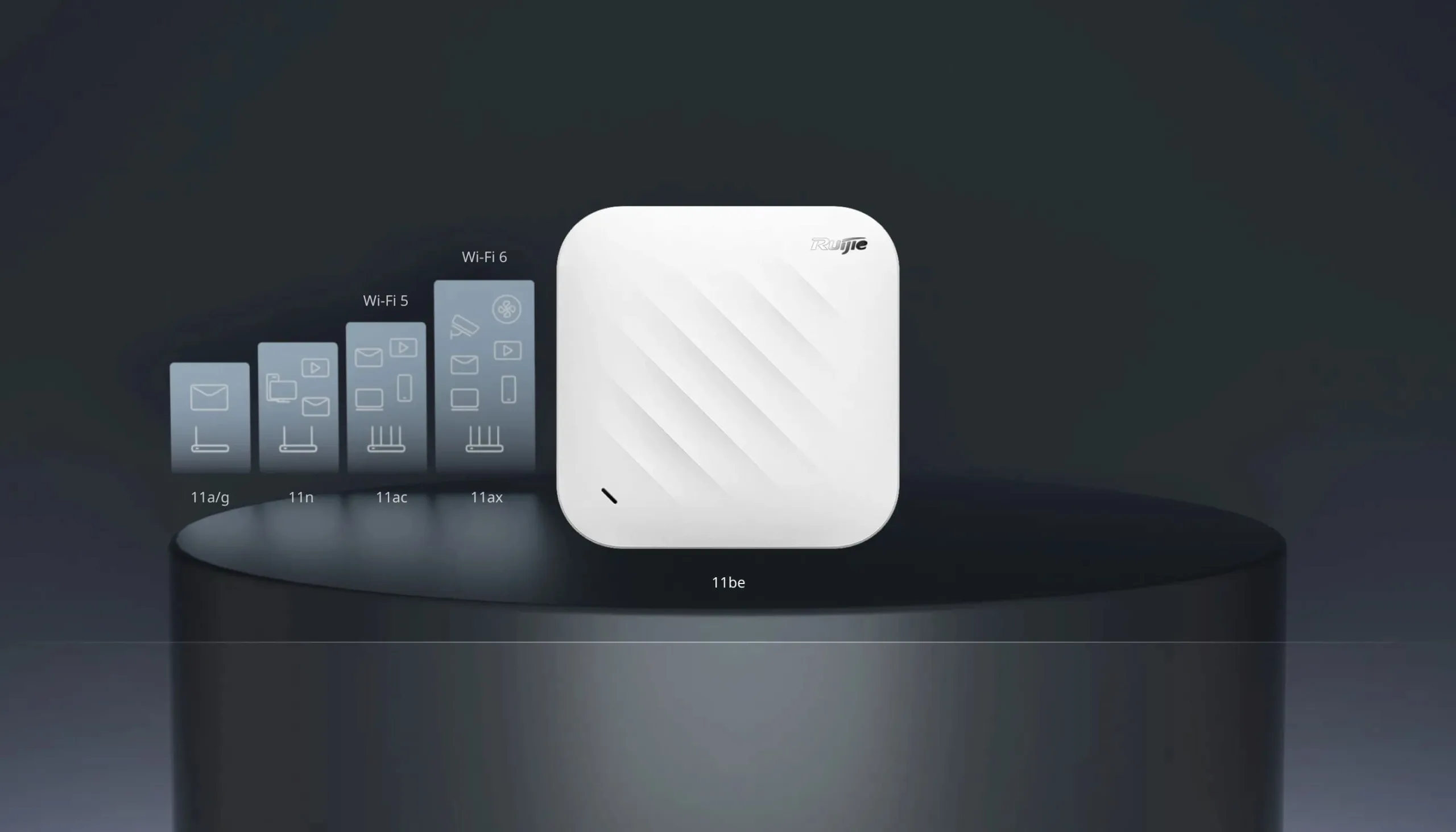
Ruijie RG-AP9861-R for High-Density Enterprise Environments
Source: ruijie.com
In high-density enterprise environments, access points are expected to do more than simply deliver fast wireless speeds. They must also maintain stable connectivity while supporting hundreds of active devices simultaneously. This is where the Ruijie RG-AP9861-R is designed to stand out.
As an enterprise-grade indoor Wi-Fi 7 access point, the RG-AP9861-R is built for demanding environments such as multi-floor office buildings, auditoriums, campuses, hospitals, and operational spaces with intensive wireless usage. With throughput support of up to 24.4 Gbps and 18 spatial streams, the device is designed to distribute network traffic more efficiently, particularly when users are simultaneously accessing cloud applications, video conferencing platforms, and large data transfers.
The RG-AP9861-R also utilizes the 6 GHz spectrum to provide wider channels and reduced interference. This helps maintain more consistent wireless performance in areas that are typically prone to congestion, such as meeting rooms, open workspaces, and high-traffic public areas.
To further simplify wireless management, Ruijie Enterprise equips the device with Built-in AI Radio technology that enables automatic, real-time network optimization. The system can analyze spectrum conditions and dynamically adjust channels to help maintain stable connectivity without increasing the operational burden on IT teams.
From an infrastructure perspective, the RG-AP9861-R also supports integration with Ruijie Simplified Optical Ethernet Solution, enabling more centralized, scalable, and efficient network management for long-term enterprise growth.
Read More: WiFi 7: The Future Internet Connectivity Revolution
Build a Future-Ready Enterprise Network with MBT
Implementing Wi-Fi 7 is not simply about upgrading wireless hardware. It is part of a broader strategy to build infrastructure capable of supporting the growing demands of modern business operations.
With proper planning, enterprises can improve network stability, support the growing number of connected devices and applications, and maintain operational productivity over the long term.
As part of CTI Group, Mega Buana Teknologi (MBT) serves as a trusted technology partner, helping enterprises through every stage of their network transformation journey, from network assessment and architecture planning to the implementation of Ruijie Enterprise Wi-Fi 7 solutions tailored to specific business needs and operational scale.
Consult with the MBT team to identify the right Wi-Fi 7 implementation strategy for your enterprise and build a future-ready network infrastructure that supports digital transformation, operational efficiency, and long-term business growth.
Author: Wilsa Azmalia Putri – Content Writer CTI Group