
Enterprise storage automation is becoming essential as organizations continue to scale modern workloads. As applications and virtual machines (VMs) multiply, many IT teams still rely on manual storage provisioning, slowing deployments, increasing cross-team coordination, and creating unnecessary operational overhead.
To address these challenges, Red Hat OpenShift and NetApp Trident provide a Kubernetes-native approach to storage management, enabling faster, more consistent provisioning with minimal manual intervention.
Why Storage Operations Remain a Challenge in Modern Enterprise Infrastructure
Modern infrastructure has unlocked greater flexibility and scalability, but it has also introduced new operational challenges. As organizations run both VMs and containers across on-premises data centers and cloud environments, storage management has become significantly more complex than in traditional infrastructure.
Every stateful application requires reliable, persistent storage. However, when workloads are distributed across multiple clusters using different tools and processes, IT teams often must manage storage configurations separately for each environment. This leads to slower provisioning, greater configuration inconsistencies, and increasing scalability challenges as workloads continue to grow. Instead of focusing on innovation, valuable IT resources are often consumed by repetitive operational tasks.
The Shift Toward Kubernetes-Native Storage Management
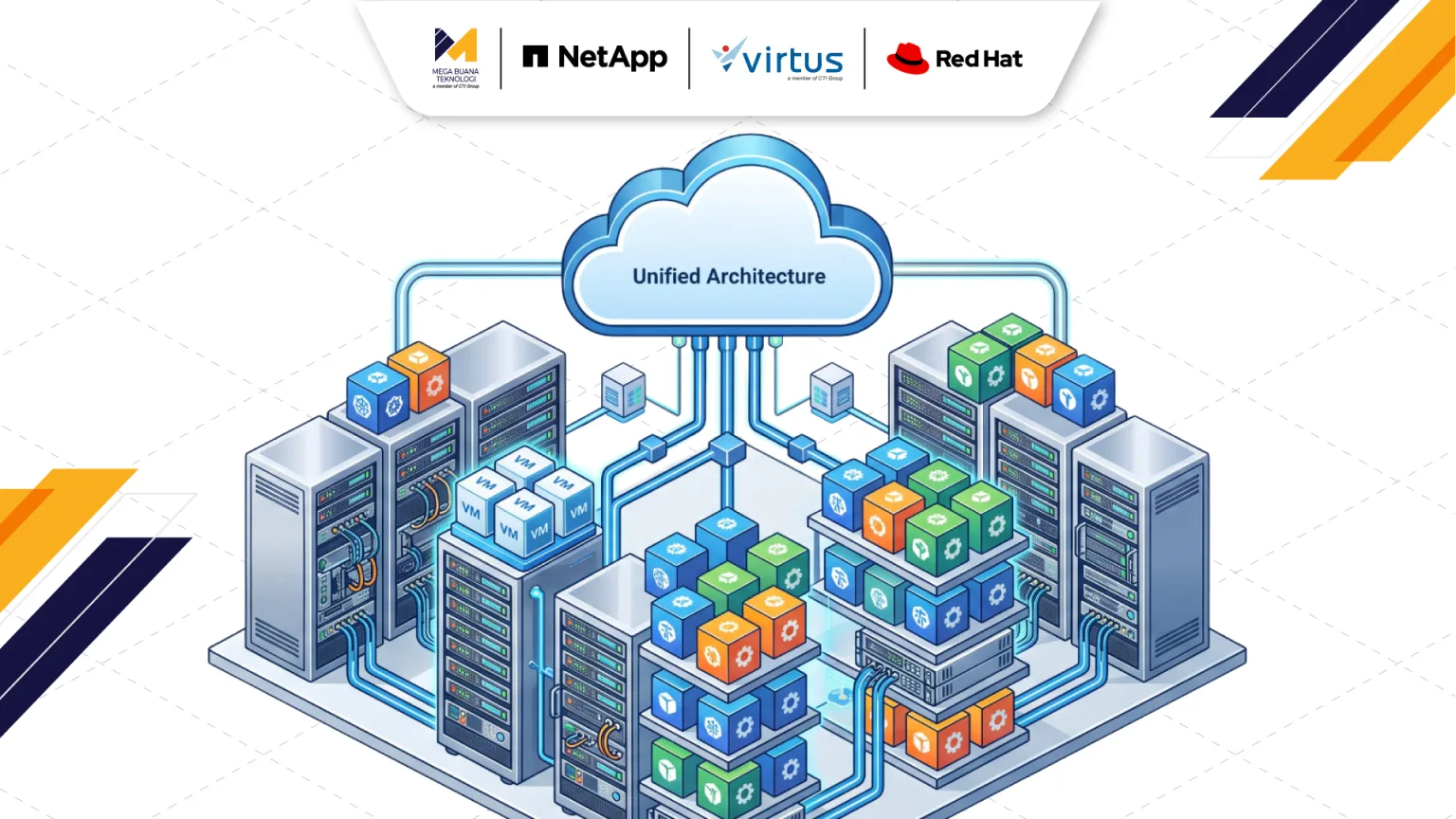
Kubernetes has evolved far beyond its original role as a container orchestration platform. With Red Hat OpenShift, organizations can now manage virtual machines and containers within a unified platform.
This evolution has also changed how storage is managed. Rather than relying on separate administrative processes, storage provisioning, policy management, backup, and replication can now be handled directly through Kubernetes. This declarative approach delivers more consistent operations, improves scalability, and aligns storage management with modern infrastructure practices.
Why Storage Automation Has Become the New Standard
Modernizing infrastructure is no longer just about adopting Kubernetes or moving workloads to the cloud. It also requires operational processes that are automated, consistent, and scalable. As a result, storage is increasingly managed as part of the application platform rather than through disconnected manual workflows.
This approach enables organizations to accelerate application deployments, reduce operational complexity, and maintain consistent governance and security policies across hybrid environments.
NetApp Trident: Simplifying Storage Automation for Kubernetes
NetApp Trident is a dynamic Container Storage Interface (CSI) provisioner that brings the enterprise storage capabilities of NetApp ONTAP, including snapshots, cloning, and replication, directly to Kubernetes and Red Hat OpenShift workloads.
With Trident, administrators no longer need to manually provision storage whenever new workloads are deployed. Instead, storage is automatically provisioned based on predefined policies using Kubernetes for declarative configurations, enabling faster and more consistent application deployments.
The latest Trident 26.02 release introduces several notable enhancements. Parallel execution for ontap-nas and ontap-san backends improves storage operations in large-scale Kubernetes environments. Trident AutoGrowautomatically expands volumes when storage capacity runs low, while expanded support for Amazon Elastic Kubernetes Service (EKS) with Amazon FSx for NetApp ONTAP simplifies cloud deployments. Together, these improvements reduce operational overhead while enhancing infrastructure reliability.
How NetApp Trident Simplifies Storage Provisioning
One of NetApp Trident‘s key strengths is its policy-driven storage provisioning. Administrators simply define a StorageClass that specifies performance requirements, storage media, and data protection policies, and Trident automatically provisions the appropriate storage volumes whenever new workloads are deployed.
This capability delivers significant value for organizations running dozens or even hundreds of applications. Provisioning that once created operational bottlenecks can now be completed in seconds. Trident AutoGrow helps maintain storage availability without manual monitoring, while autotiering automatically moves infrequently accessed data to lower-cost storage tiers. The result is an infrastructure that maintains application performance while optimizing storage costs.
Read More: Hybrid Cloud Storage: A Smarter Way to Manage Data in the Digital Era
Why Red Hat OpenShift and NetApp Are Better Together
Red Hat officially certifies the Trident Operator within the OpenShift ecosystem, ensuring the integration meets enterprise requirements for compatibility, security, and production stability.
The operator simplifies storage administration by automating installation, configuration, and lifecycle management. This allows IT teams to spend less time on routine operational tasks and more time on strategic initiatives.
Organizations also benefit from consistent operational experience across hybrid environments. Whether running NetApp AFF or FAS systems on-premises or leveraging Amazon FSx for NetApp ONTAP and Google Cloud NetApp Volumes in the cloud, the same workflows and management practices can be applied without environment-specific configurations. This consistency simplifies hybrid cloud operations while reducing administrative complexity.
Business Benefits of Enterprise Storage Automation
Storage automation delivers more than technical improvements; it also creates measurable business value.
Organizations can provision new environments in minutes instead of hours or days. Consistent storage policies reduce the risk of human error, while capabilities such as AutoGrow and autotiering help optimize capacity utilization without unnecessary overprovisioning.
By reducing the operational burden on IT teams, organizations can dedicate more resources to innovation and strategic business initiatives. The result is a more agile, efficient infrastructure that is better equipped to support future business growth.
Build a Scalable Enterprise Infrastructure with MBT and VTI
Successful storage automation requires more than the right technology. It also depends on careful planning, architectural expertise, and a well-executed implementation strategy to ensure a smooth transition without disrupting existing operations.
As part of CTI Group, Mega Buana Teknologi (MBT) is an experienced NetApp partner that helps organizations design and implement NetApp Trident-based storage solutions tailored to their infrastructure requirements. Complementing this expertise, Virtus Technology Indonesia (VTI) delivers deep knowledge of the Red Hat OpenShift ecosystem, ensuring seamless integration between container platforms and enterprise storage from day one.
Together, MBT and VTI provide end-to-end services covering assessment, solution design, implementation, and post-deployment optimization. The result is a simplified, automated infrastructure that enables organizations to operate more efficiently while supporting long-term business growth.
Contact MBT and VTI to discover how modern enterprise storage automation can improve operational efficiency and accelerate your organization’s infrastructure transformation.
Author: Wilsa Azmalia Putri – Content Writer CTI Group